
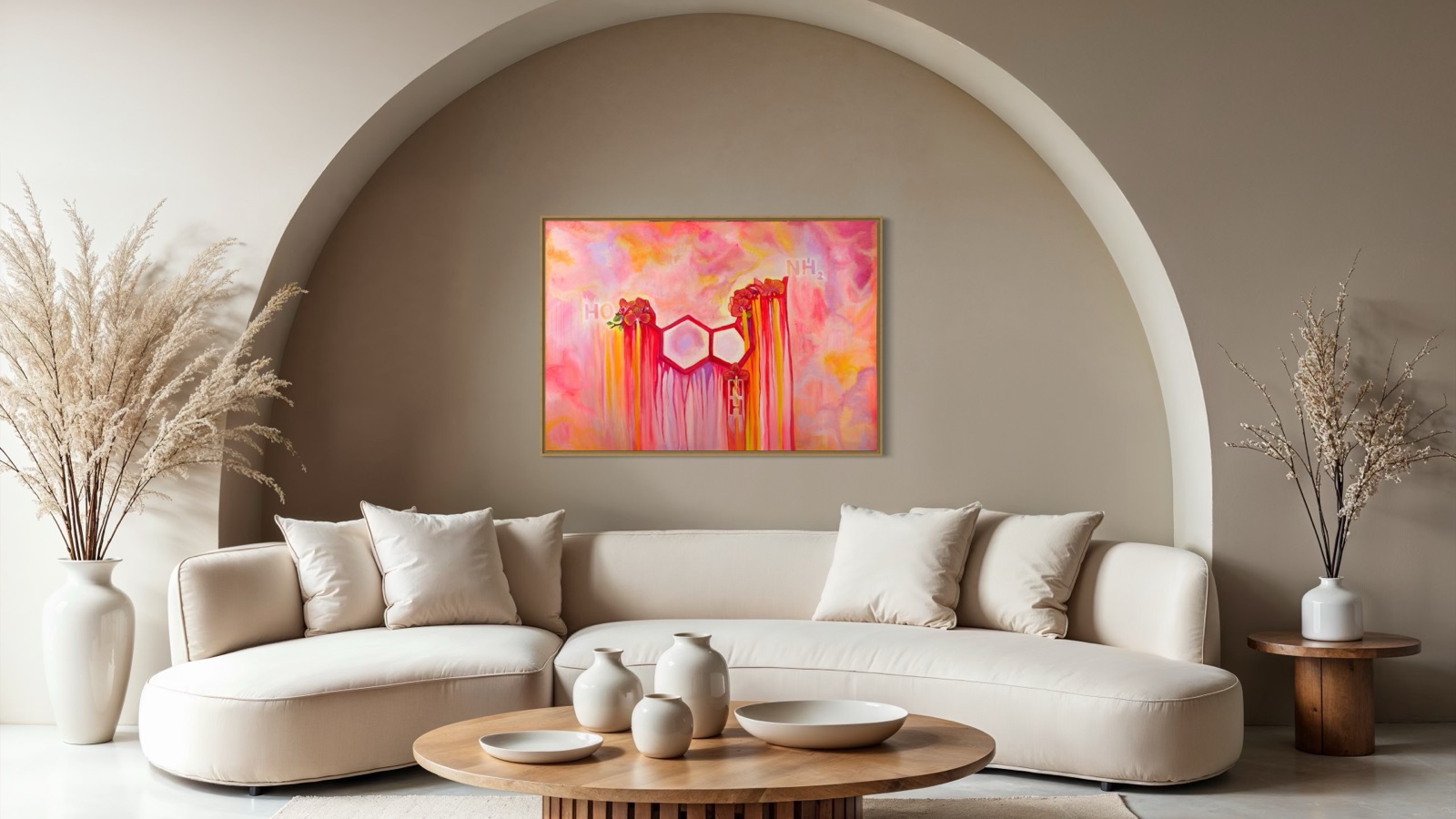
Choosing wall art for your living room is one of those decisions that looks simple until you’re standing in front of a blank wall, scrolling through hundreds of options, unsure what will actually work. Size, color, and style all matter — but so does something harder to put into words: whether the piece changes how the room feels. Here’s a practical way to think it through, room by room, wall by wall.
1. Size: bigger is usually better than you think
The most common mistake in choosing living room art is going too small. A piece that looks generously sized on your screen often shrinks once it’s on an actual wall. As a rough guide:
- Above a sofa: aim for artwork that spans about two-thirds of the sofa’s width.
- Above a mantel or console: the piece should feel proportional to the furniture below it — not floating, not overwhelming.
- Large, open walls: a single statement piece often works better than several small ones, especially in a room meant for calm rather than clutter.
If you’re torn between two sizes, the larger one is almost always the right call in a living room, where art is viewed from a distance across the room.
2. Color: let the art set the tone, not just match it
You don’t need a print that matches your throw pillows exactly. In fact, art that echoes your palette too precisely can end up feeling flat, like it was chosen for the color rather than the content. A better approach: pick one or two colors from the room’s existing palette and look for art that includes them somewhere — even as an accent — while still standing on its own as a piece you’d want to look at daily.
3. Style: think about the feeling you want the room to hold
A living room is where you unwind, host, and spend unstructured time — so the art should support that feeling rather than compete with it. Abstract and spiritually-inspired pieces tend to work especially well here, because they invite quiet reflection rather than demanding a specific interpretation. A painting that blends realism with abstraction — detail and freedom in the same frame — gives the eye somewhere new to land every time you look at it.
4. Original painting or fine art print?
Both work beautifully in a living room, and the choice often comes down to intention and space:
- A one-of-a-kind original makes sense as a true centerpiece — the one piece in the room everyone asks about.
- A fine art print is a wonderful way to bring a specific piece into your space at a more accessible size and price, especially if you want to build out a gallery wall across multiple works.
5. Trust the pieces that make you pause
Beyond all the practical guidance, the best living room art is the piece you don’t get tired of. Works like “The Shape of What Never Was” or “Identity Is Flexible” are built to hold up to daily viewing precisely because they’re layered — there’s always a new detail or feeling to notice, rather than a single message you absorb once and stop seeing.
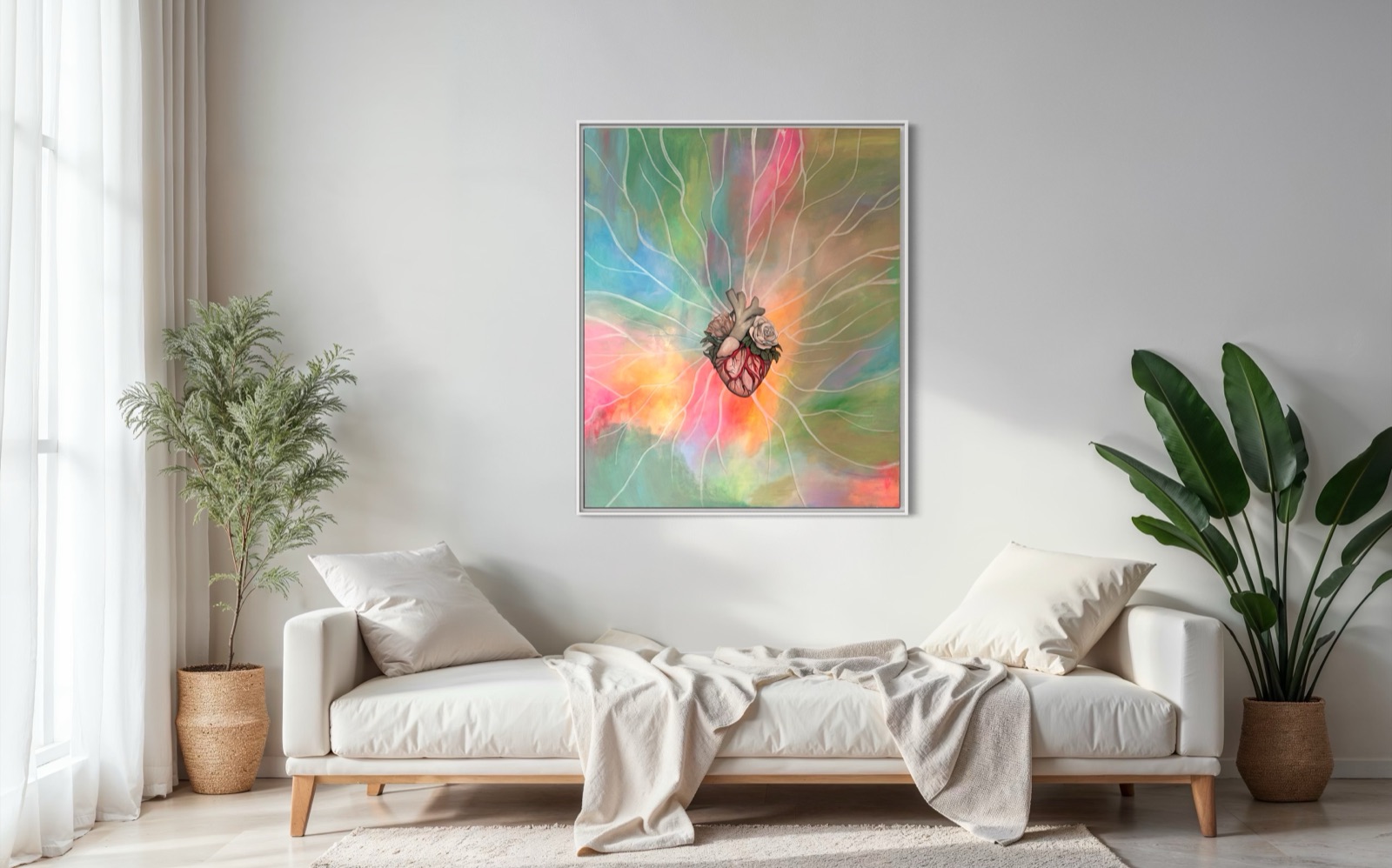
Bringing it into your space
If you’re ready to find the piece that changes the frequency of your living room, browse the full fine art print collection or explore original paintings for a true statement piece. Measure your wall, trust what moves you, and give the room time to settle around it.